
Our Story
In The Beginning
Historically, Mennonites were not particularly noted for their love of theatre. In the earliest years, the Mennonites who lived in the Netherlands and Germany, as well as those who later set up in colonies in southern Russia, had neither a theatrical tradition nor a notable playwright. How was it then that a group calling itself Winnipeg Mennonite Theatre was founded and came to flourish in Winnipeg?
It all started in the “Golden Years” of the early 1900s, when Russia experienced a blossoming of new cultural activities. Many young Mennonites in the colonies of southern Russia placed more emphasis on literature and the arts when taking up university studies in Moscow and abroad.
Mennonites had been immigrating to Manitoba, sometimes as refugees fleeing persecution in Europe, since the early 1800s, but everything would change with the coming of the First World War. Following in the wake of the Bolshevik Revolution and a series of famines throughout the early years of the Soviet Union, approximately 20,000 Mennonites would flee, and the 1920s saw many of these students immigrate to Winnipeg.
Arrival in Winnipeg
By the 1920s, there were only two Mennonite congregations in Winnipeg, one of them being the Schönwieser Mennoniten Gemeinde, established in 1926. In 1951, the name was changed to the First Mennonite Church of Winnipeg and a new building was constructed on Notre Dame Avenue, which we still rehearse in to this day. In those days, theatrical performances of any kind were generally considered too “worldly” and not encouraged. However, there were exceptions to this rule by some members of the Schoenwieser congregation.
The first dramatic production by our pioneers in Winnipeg was a one-act play performed in the now no longer existing Austro-Hungarian Hall on Higgins Avenue in 1928. This program was augmented by some musical numbers. Unfortunately, while no written record is available about this event, we’ve kept better records since then, and you can learn all about what we’re up to through our newsletter.
By the 1930s plays were being presented for Mennonite audiences in small halls and church basements, and eventually in rented facilities such as the Ukrainian Hall “Prosvita” on Pritchard Avenue, the Hebrew Sick Benefit Hall on Selkirk Avenue, and later in the (then new) Tec Voc High Shcool. Some of our highlights from these years included the challenging dramatic plays Saad und Ernte and Der Selbstschutz. Low German plays such as Daut Schultebot by Mennonite authors Jacob H. Janzen and Nikolai Unruh were also staged. We even performed plays for children like Dornroeschen and musicals.
In those days, all of our plays were presented in German, but with the outbreak of the Second World War in 1939, all German plays were discontinued.
After the War and the Jugundverein
In 1946 and with the conclusion of the war, the Jugendverein, or Young Peoples Club of the Schoenweiser Gemeinde was revitalized and organized into ten sub-committees, with the music and drama departments being the most active. Drama productions performed in German took place once a year at the Pantages Playhouse Theatre on Market Avenue. At that time, religious plays were frequently presented, but comedies and German classics such as Minna von Barnhelm by Iessing and Wilhelm Tell by Schiller were welcome alternatives. These plays presented major challenges for an amateur theatre group, but they helped to establish respectable standards for all productions in the future.
The Jugendverein productions ran for twenty years before coming to an end in 1966. Over the next six years, a core group of individuals who had previously been involved in the Jugendverein aspired to bring theatrical works that appealed to the still-existing audiences of the Mennonite and German communities in Manitoba.
In 1972, John Enns, Paul Neustaedter, and Gerd Neuendorf pooled their money together and joined with other theatre-minded people from various Mennonite churches and the larger German-speaking population as a whole to launch the Winnipeg Mennonite Theatre Society.
The Early Years of WMT
Since its founding in 1972, our stated purpose was “To provide good theatrical performances, both serious and comic, in both the English and German languages.” As such, our first performance was Und keiner hört hin, or “And Nobody Listens”, written by Gert Neuendorff between 1970 and 1972 for WMT. The play dealt with the problems of multiple generations living together, the immigrant experience, and the conflicts that arise when the roots of those generations are embedded in the soils of different countries, themes that remain relevant here at WMT and in society as a whole to this very day. The text of the play switched between German and English, sometimes within the same sentence, to reflect the bilingual nature of Mennonite families at that time.
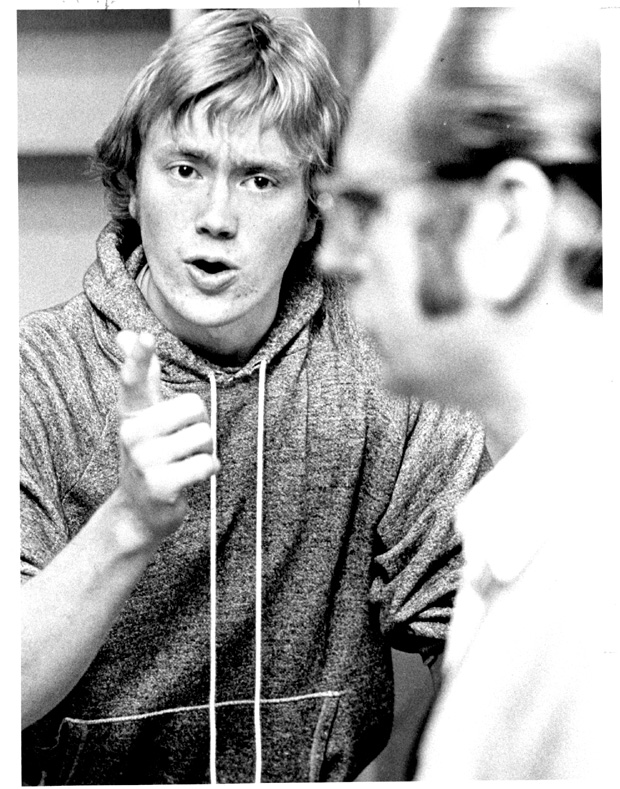
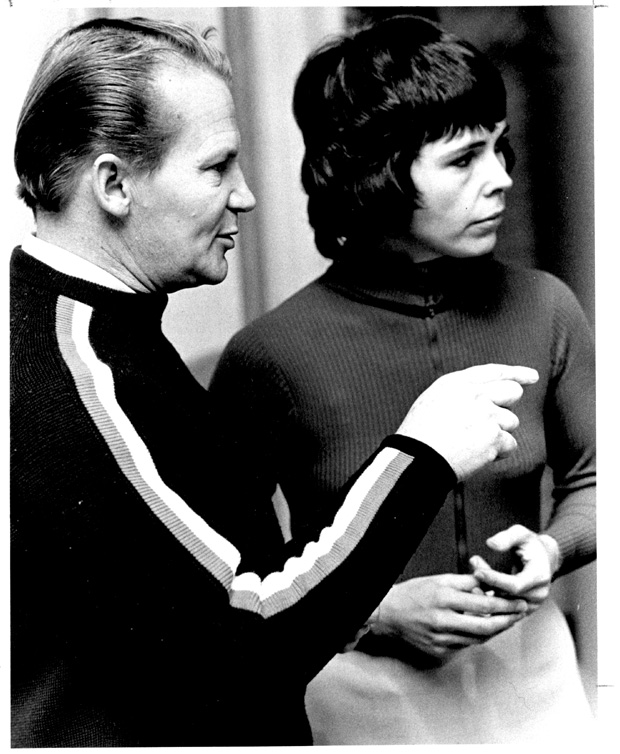
Our second performance quickly followed in 1973, with Die Physiker (The Physicist) by F. Duerrenmatt, and by 1974 we were actively producing two shows every season, a tradition we continue to this day. Our first fully English-language play, a satire called Suppressed Desires by Susan Glaspell and George Cram, was produced as part of an evening of Three One-Act Plays in 1974. Every season from that year on would include a mixture of English and German plays.
The End of the 20th Century
In 1978, the Winnipeg Mennonite Theatre Society became an officially registered not-for-profit charitable organization in recognition of our artistic contributions to the community. We’ve maintained our charitable status every year since, and we are extremely grateful to our audiences, donors, and sponsors who help us do the work that we do. Their interest and support is greatly appreciated, and we couldn’t do it without them!
Throughout the 1970s, 80s, and 90s, WMT would produce all manner of theatre, including operas and operettas such as Die Zauberflote (The Magic Flute) by Wolfgang Amadeus Mozart, German adaptations of popular plays such as Das Glasmenagerie (The Glass Menagerie) by Tennessee Williams in 1977 or Hamlet, Prinz von Daenemark (Hamlet, Prince of Denmark) by William Shakespeare, and plays by local playwrights such as 1987’s The Courier by Vern Thiessen or 1994’s Departures and Arrivals by Carol Shields.
Dozens of volunteers worked tirelessly to create finely detailed costumes and elaborately decorated stages, with actors and musicians in a pit orchestra performing for audiences of over two thousand people filling the seats of the Pantages Playhouse Theatre.
Y2K: The Dawn of a New Millennium
WMT rang in the new millennium with our first entry in the Winnipeg Fringe Festival, The Diaries of Adam and Eve. We participated in almost every single one of the (now-defunct) Master Playwright Festivals organized by the Royal Manitoba Theatre Centre, presenting works such as An Enemy of the People by Henrik Ibsen or The Real Inspector Hound by Tom Stoppard.
As the years went by and our core audiences grew older, WMT experienced what many theatre companies and organizations have in recent decades. Financial and human resources started to stretch, and productions became much more modest affairs compared to the heights reached in the previous century, but the creative energy and love of theatre remained strong as ever.
In February 2020, we produced The Taming of the Shrew by William Shakespeare as part of the final Master Playwright Festival, just weeks before the whole world was turned upside-down by the arrival of the COVID-19 Pandemic. Then, for the first time in our history, our stage would fall silent, and no shows would be produced for an entire season.
…But we pressed on, meeting virtually every month to keep the spirit alive, and in October 2021 we digitally released a radio drama adaptation of The Death of Pollyanna by Veralynn Warkentin. With the lifting of restrictions in 2022, we were ready to celebrate our 50th anniversary with both a return to the stage in May with You Can’t Take It With You by George S. Kaufman and Moss Hart, a gala dinner, and a playwriting competition calling for one-act plays on a Mennonite theme, with the top three to be staged and performed later that year.
WMT Today
Winnipeg Mennonite Theatre today is stronger than ever and looking forward to many more years of making great works of art. For years, we have rented studio space in various warehouses throughout downtown Winnipeg as a place to store our ever-growing collection of flats, props, costumes, and build our set pieces. If you would like to join us in bringing theatre to our community, it’s never too late! We welcome everyone from all walks of life to participate in the joy of theatre, on-stage or off.
We still present at least two productions in each of our seasons and continue to tell stories about family, community, and the spirit of giving, as we have for the past fifty years. All of us here at WMT truly appreciate the support you’ve given us over the years, and we look forward to seeing you at our next performances. Long live the arts!
Get Tickets for our Upcoming Shows
-

Marion Bridge Friday Oct 23 7:35 PM Evening Show
$25.00 -

Marion Bridge Saturday Oct 24 2:35 PM Matinee Show with Talkback
$25.00 -

Marion Bridge Saturday Oct 24 7:35 PM Evening Show
$25.00 -

Marion Bridge Sunday Oct 25 2:35 PM Matinee Show
$25.00 -

Bare Bear Bones Friday Apr 16 7:35 PM Evening Show
$25.00 -

Bare Bear Bones Saturday Apr 17 2:35 PM Matinee Show with Talkback
$25.00 -

Bare Bear Bones Saturday Apr 17 7:35 PM Evening Show
$25.00 -

Bare Bear Bones Sunday Apr 18 2:35 PM Matinee Show
$25.00